
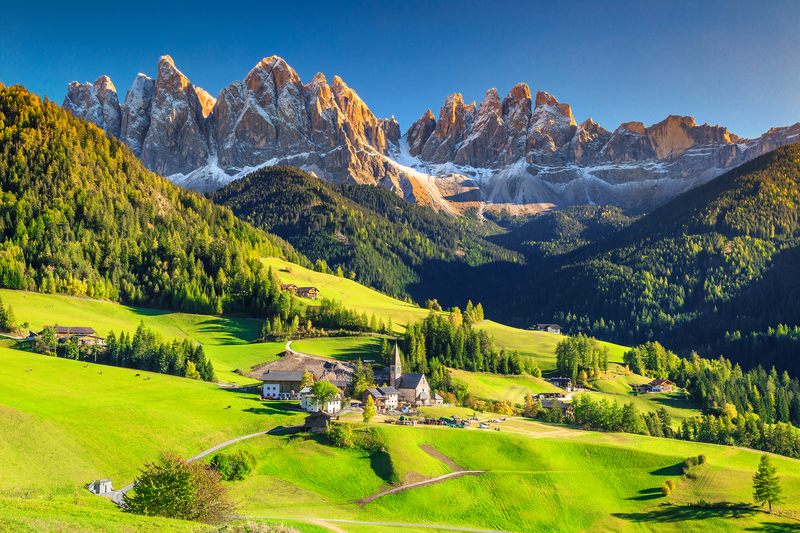
Mountain destinations are increasingly consolidating their appeal. Over the past two decades, multiple market reports have highlighted strong growth in alpine and ski resort real estate, with the Alps firmly established as one of the most dynamic and sought-after hubs in the global luxury mountain property market.
Cortina d’Ampezzo, known as the “Queen of the Dolomites,” continues to stand out as Italy’s leading prime destination with the highest property values, further supported by significant investments linked to the 2026 Winter Olympics, particularly in infrastructure and transport connectivity.
How the Winter Olympics Boost Tourism Demand and Destination Value
According to the Michigan Journal of Economics, the Olympic Games represent a strategic milestone that can strengthen Italy’s position among Europe’s leading leisure markets. Expected positive impacts include increased overnight stays in alpine destinations and the growth of cultural tourism in host cities, enhanced by Olympic branding.
In 2025, Cortina d’Ampezzo solidified its place among the world’s top 20 prime destinations, standing out as the only Italian location on the list and the most expensive mountain town in the country. The town distinguishes itself as a unique benchmark, combining the allure of the Dolomites – a UNESCO World Heritage site since 2009 – with the global media visibility brought by the Winter Olympics.
Limited New Development Driving Record-High Prices
Strict building regulations and stringent environmental protections in Cortina d’Ampezzo significantly limit new construction. This tight restriction on supply has further driven prices upward, with some high-end properties now exceeding €20,000 per square meter, placing Cortina among the most expensive mountain destinations in Europe.
Italy’s Position in the European Prime Alpine Property Landscape
The European prime property ranking, which includes homes valued over €750,000, is dominated by resorts in France and Switzerland. Leading the list are French destinations such as Val d’Isère (€ 32,500/m²) and Swiss towns like Gstaad (€30,700/m²) and St. Moritz (€30,300/m²). The latter is recognised for the market stability and consistency. Following a near-regular alternation of top spots among French, Austrian, and Swiss towns, Italy’s sole representative in the ranking, Cortina d’Ampezzo, appears around 18th–19th place (positions vary slightly across different rankings), with an average value of €15,900 per square meter (+7%). Just outside the top 20, approximately in 30th place, is Italy’s second-ranked resort, Cervinia (€11,000/m²), followed by other notable Alpine areas such as Alta Badia and Val Gardena.
The Resilience of the Alpine Luxury Property Market
It is worth highlighting, as reported by SkyTG24, that the Alpine real estate market plays a key role in reshaping the dynamics of the luxury segment. While many global high-end markets have experienced a slowdown, mountain properties have seen an average increase of 23% over the past five years. These figures confirm the Alps as one of Europe’s most resilient sectors, both in terms of investment potential and quality of lifestyle.
According to Il Sole 24 Ore (December 1, 2025), the Italian Alps are benefiting from several factors that are boosting their appeal. In particular, the Dolomites have seen a significant increase in visibility ahead of the 2026 Winter Olympics, supported by targeted investments in infrastructure, transport, and services that have expanded their international demand base. In this context, Cortina d’Ampezzo confirms its position as Italy’s leading alpine destination, further strengthened by the flat tax and growing interest from high-net-worth individuals (HNWIs).
Beyond the Olympics: Structural Drivers Shaping Cortina’s Long-Term Appeal
Cortina’s appeal extends far beyond its connection to the Olympics: its real estate market has developed thanks to several structural factors. These include the post-pandemic recovery of summer tourism and the growing interest in year-round mountain living, further supported by the rise of remote work. According to Il Sole 24 Ore, another factor boosting both the ski market and investment in these areas is climate change, which has prompted many mountain destinations to adopt “four-season” models, promoting off-season tourism and diversifying their offerings.
High demand, limited supply, and growing international visibility are cementing Cortina d’Ampezzo as a key destination for global investors and second-home buyers. At the same time, this transformation has sparked an increasingly intense debate around sustainability, accessibility, and long-term planning for the town’s future. In this context, Cortina has evolved from a renowned ski resort into one of Europe’s leading real estate hubs. It will be interesting to see whether, following the extensive media coverage of the Olympics, property values in the area will continue to rise.